
Sciatica vs. Herniated Disc: Same Thing, Different Name
By John Daniels, DC, CCSP — Daniels Chiropractic, Racine, WI
One of the most common mix-ups we hear from new patients is the assumption that sciatica and a herniated disc are two separate problems, maybe even competing diagnoses. They're usually not. This post is a closer look at that distinction, and if you haven't already, our main sciatica page covers the broader picture, including what we actually do about it.
Sciatica Is a Symptom, Not a Diagnosis
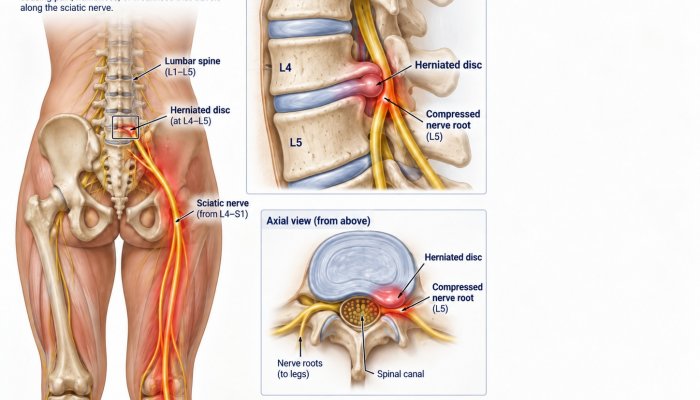
Sciatica describes what you feel: pain, numbness, tingling, or a burning sensation running down the leg, usually along the path of the sciatic nerve. It's a description of the symptom pattern, not an explanation of what's causing it. A herniated lumbar disc pressing on a nerve root is typically the actual cause. So when someone asks whether they have sciatica or a herniated disc, the honest answer is usually both, described from two different angles.
The word that tends to worry people more is "herniated disc," and it usually doesn't need to. Disc herniations are common, they tend to be episodic rather than a constant, worsening problem, and most of them don't require surgery. The large majority can be managed conservatively.
Common Signs
- Low back pain that runs down through the buttock and leg, sometimes fairly mild at first
- Numbness, tingling, or burning along a specific path in the leg, depending on which nerve root is involved
- Pain that tends to worsen with sitting, bending forward, or certain movements
- In more advanced cases, noticeable weakness, such as trouble lifting the toes or foot
When to Seek Immediate Medical Attention
Most sciatica responds well to conservative care, but a few signs need prompt medical evaluation rather than a wait-and-see approach. The most common one we watch for is progressive weakness, meaning strength that's getting worse rather than holding steady or slowly improving. We also screen for numbness in the groin or inner thighs and any new problems with bowel or bladder control, since those can point to cauda equina syndrome, which is a medical emergency. If conservative care isn't producing improvement over roughly the first two to four weeks, that's typically when we move toward imaging and bring in a referral alongside continued care.
Why the Names Get Confused
A disc sits between two vertebrae and acts as a cushion. When part of it bulges or herniates, it can press against a nearby nerve root as that root exits the spine. The irritation or compression at that nerve root is what produces the pain, numbness, and tingling that travel down the leg, which is what people are describing when they say "sciatica." Spinal stenosis and certain muscle referral patterns can produce something that feels similar, which is part of why the exam matters, but a herniated disc is the most common underlying cause behind the classic sciatica presentation. For the fuller range of causes, including muscle-related ones like piriformis syndrome, see What Actually Causes Sciatica.
How This Gets Treated
Since sciatica and a herniated lumbar disc are usually the same underlying problem, treatment doesn't really change based on which term gets used. What we recommend depends on what the exam finds. Depending on the case, that can include:
- Chiropractic adjustments
- Class IV laser therapy, mainly to help bring down inflammation
- Dry needling, which Dr. Marissa Kaul is certified in, for muscle spasm and pain control
- Shockwave therapy (ESWT), which we tend to reach for on more chronic cases to help restart the healing process
- Exercise therapy, to help rebuild strength and restore movement as symptoms allow
- Electrical muscle stimulation (EMS), for additional pain control
Not every case needs all six, and we reassess as you progress rather than committing to a fixed plan upfront.
What You Can Do at Home
Between visits, the emphasis is usually on staying as active as pain allows rather than resting completely, along with specific movement work when it's appropriate for the case. What helps varies quite a bit from person to person, so this is really something we tailor once we know what we're dealing with.
Frequently Asked Questions
If I have a herniated disc, does that mean I need surgery?
Usually not. Disc herniations are common, and most are managed conservatively without surgery ever becoming necessary. Surgery tends to come into the conversation when there's significant or progressive weakness, or when conservative care over a reasonable trial period hasn't helped.
Can a disc herniation heal on its own?
It's common for disc herniations to improve over time as the episode settles, though how quickly and how completely varies quite a bit from person to person. That's part of why we reassess as care progresses rather than promising a fixed outcome upfront.
Is sciatica always caused by a disc problem?
Not always. Spinal stenosis and referred pain from muscles like the gluteus medius or minimus can mimic true sciatica closely enough to be mistaken for it, which is part of why a proper exam matters before assuming it's disc-related. We go into how we tell these apart in Sciatica or Something Else?
Ready to Get Checked Out?
Daniels Chiropractic has taken care of Racine families since 1948, with more than 800 patient reviews and a 5.0 rating on Google. If you are in pain today, we try to get you in the same day.
Call or text (262) 638-9999, or schedule online below.