
IT Band Syndrome Treatment in Racine, WI
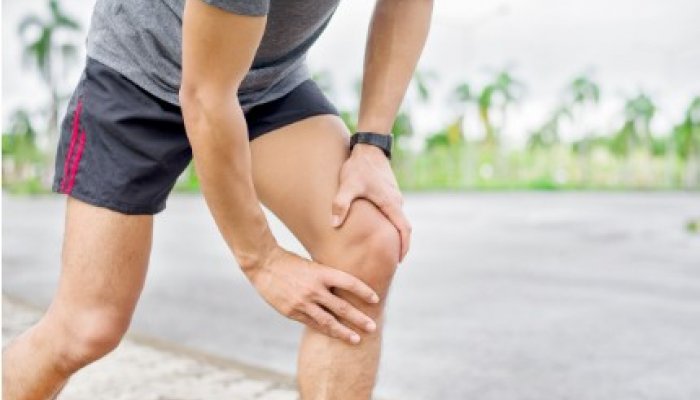
Sharp or burning pain on the outside of the knee that shows up at a predictable point in every run or walk is the signature of IT band syndrome. At Daniels Chiropractic in Racine, WI, we treat it with chiropractic care, myofascial release, dry needling, Class IV laser therapy, and shockwave therapy, combined with the hip strengthening that keeps it from returning the moment you resume training. It is one of several conditions covered on our knee pain treatment page.
What Is IT Band Syndrome?
The iliotibial band is a thick, fibrous sheet of connective tissue that runs down the outside of your thigh from your hip to just below the knee. Every time your knee bends and straightens, that band passes over a bony prominence on the outside of the thigh bone. Repeat that thousands of times per run, and the sensitive tissue in that space becomes compressed and irritated.
It is one of the most common causes of outer knee pain in runners and cyclists, and it also shows up in hikers, walkers who recently increased their distance, and anyone who ramped up activity faster than their hips were ready for.
Two findings turn up again and again on examination: weakness in the gluteal muscles, and one leg being functionally or structurally longer than the other. Both change how your pelvis and thigh bone behave with each stride, and both increase compression at that sensitive spot on the outside of the knee. Neither one is something you can see or feel on your own, which is why an exam matters more here than it does for most running injuries.
Common Signs of IT Band Syndrome
- Sharp, burning, or stabbing pain on the outside of the knee — not the front, not the joint line
- Pain that appears at a fairly predictable distance or time into activity, then worsens if you continue
- Symptoms that are noticeably worse running downhill, descending stairs, or on a banked surface
- Relief almost immediately when you stop, only for it to return at the same point next time
- Tenderness when you press on the outside of the knee, just above the joint
- Occasionally a snapping or rubbing sensation on the outside of the knee
When to Seek Immediate Medical Attention
Seek prompt medical care if the knee gives way, locks and will not straighten, or swells significantly after an injury — those signs point toward a structural problem rather than IT band irritation. Also get evaluated right away if the knee becomes hot, red, and swollen with a fever, or if you develop pain, swelling, warmth, or redness in your calf.
Why Foam Rolling the IT Band Rarely Solves It
This is the most common misconception we correct. The IT band is extraordinarily strong connective tissue — it is not a muscle and it does not meaningfully stretch or lengthen no matter how aggressively you roll it. Rolling the outside of the thigh can feel like it helps temporarily, and it is not harmful, but it is not addressing the cause.
The cause is almost always what is happening at the hip. When the muscles that stabilize your pelvis and control your thigh bone fatigue or fail to fire properly, the thigh drops and rotates inward with each step, increasing the compression at the outside of the knee. Add a sudden jump in mileage, a lot of downhill running, worn shoes, or running on a cambered road, and the tissue gives up. Treatment that ignores the hip tends to produce relief that lasts exactly as long as you stay off the road.
How We Treat IT Band Syndrome
Your care plan is built around your exam findings and what is loading the outside of your knee. Most knee plans run twice a week for four weeks, and may combine any of the following:
- Chiropractic care: The exam frequently finds joints in the hip, pelvis, low back, or ankle that are not moving freely, which creates tightness, discomfort, and over time can accelerate unwanted joint degeneration. We apply a gentle force by hand, with handheld instruments, or with a specialized table to restore motion to those restricted joints. Freeing them up changes how the whole leg tracks with each stride.
- Myofascial release: The muscles that feed into the IT band — especially at the hip and outer thigh — get tight and develop knots with repetitive strain. Chronic tightness produces inflammation and swelling that eventually forms adhesions between tissues. Using hands or specialized tools, we apply pressure to release that tension and free the adhesions, improving circulation and restoring flexibility where the tissue actually responds to treatment.
- Dry needling: When the exam finds tender knots in the outer hip, glutes, or thigh musculature, myofascial trigger point dry needling places very thin monofilament needles directly into those trigger points to relieve discomfort and reduce the constant tension pulling the band taut.
- Class IV laser therapy: Therapeutic light waves penetrate the skin and are absorbed by the cells below, which convert that light into chemical energy that accelerates healing — much the way plants use light for photosynthesis. Laser is particularly useful for calming the irritated, sensitive tissue at the outside of the knee.
- Shockwave therapy: A handheld device delivers acoustic shock waves into the chronically irritated tissue along the outer knee and thigh. The waves break up scar tissue and stimulate blood flow, triggering your body's natural healing response — useful for cases that have been lingering for months. Treatment takes only a couple of minutes and may feel mildly uncomfortable during or shortly after.
- Electrotherapy: Light electrical pulses delivered through electrodes placed over the area of concern help decrease pain, limit inflammation, and ease muscle spasm. These are comfortable to receive and are often paired with a hot or cold pack to enhance the effect.
- Therapeutic exercise: This is what prevents the recurrence. Tight or weak muscles alter normal joint function and lead to further problems, so we target them with specific stretching and strengthening — particularly the gluteal muscles, hip abductors, and rotators — along with single-leg control work and attention to your running mechanics. Strong, flexible muscles are your best protection against re-injury.
What You Can Do at Home
Avoiding the activities that cause significant pain and getting your footwear right are two of the most useful things you can do while treatment is underway.
Activity Modification
- Runners: Minimize downhill running and stay off banked surfaces like the crown of a road, along with wet or icy footing. On a circular track, reverse direction at least every mile so you are not always turning the same leg into the problem.
- Shorten rather than stop: Cut your distance to below the point where pain typically starts. A slightly quicker, shorter stride also reduces the compression at the outer knee.
- In the gym: Avoid stair climbers, and hold off on squats and deadlifts until symptoms settle — all three load the band in exactly the pattern that irritates it.
- Cyclists: Seat height may need adjusting, and avoid a "toe-in" pedal position.
- Symptom relief: Sports cream and home ice massage over the outside of the knee can take the edge off.
- Keep up your strengthening on non-running days — that work is what determines whether this comes back next season.
Footwear
Improperly supported feet affect the alignment of every structure above them, right up through the hip. A few guidelines:
- Choose shoes with good arch support, and repair or replace any with worn soles or heels.
- Avoid going barefoot or wearing unsupportive footwear such as flip-flops. Sandal brands with better-than-average arch support include Naot, FitFlop, Orthaheel, Abeo, Vionic, and Yellow Box.
- Limit high heels — keep them to a maximum of one and a half inches, especially on days with a lot of walking.
- Cross-trainer athletic shoes tend to provide the best all-around support and shock absorption for everyday activity.
- If you have fallen arches, arch supports or custom orthotics may be worth considering.
Choosing Running Shoes
Running shoes should be replaced regularly — every 300 to 500 miles for most runners, and closer to 250 for higher-mileage or heavier-wear situations. Beyond that, the cushioning has stopped doing its job even if the shoe still looks fine. There are three basic categories:
- Motion control: Built for low or flat arches and runners who strike on the outer edge of the foot. Avoid overly stiff models, which dull your sense of ground contact and can create new problems.
- Stability or neutral: Built for average arches and typical running mechanics. Some cushioning for shock absorption, some rigidity to limit pronation.
- Cushioned: Built for high arches, where the footprint leaves only a thin band along the edge of the foot. These are more flexible and absorb the shock created by under-pronation.
If you are not sure which category you fall into, bring your current shoes with you to your appointment — the wear pattern on the sole tells us a great deal.
Frequently Asked Questions
Can you stretch the IT band?
Not meaningfully. The band is dense connective tissue built to resist lengthening, and research suggests any change from stretching is minimal. Better results come from releasing the muscles that attach into it and strengthening the hip muscles that control your leg position during activity.
How long does IT band syndrome take to heal?
It varies with how long it has been present and how much you modify your training. Cases caught early and addressed with treatment plus hip strengthening tend to resolve considerably faster than ones that have been pushed through for months. The recurring cases we see are almost always the ones where symptoms were managed but hip strength was never rebuilt.
Should I stop running completely?
Usually not. Reducing distance to below your pain threshold, avoiding hills and banked surfaces, and continuing your strengthening generally works better than complete rest, which leaves the underlying weakness untouched and sets you up for the same problem on return.
Does dry needling help IT band pain?
Yes, when trigger points are contributing. Needling the tight muscles at the hip and outer thigh reduces the tension being transmitted down the band and often improves how the leg moves within a session or two. It works best alongside strengthening rather than on its own.
Can a leg length difference cause IT band syndrome?
It can contribute. When one leg is functionally or structurally longer, the pelvis tilts and the mechanics on each side stop matching, which changes the load through the outside of the knee. It is a common finding in stubborn cases and one of the first things we check when symptoms are one-sided and not responding as expected.
Do I need orthotics or new running shoes?
Sometimes. Worn-out shoes are a frequent and easily fixed contributor, and arch supports or custom orthotics help patients whose arches have fallen. Neither is a universal recommendation — the wear pattern on your current shoes and your foot structure tell us whether it applies to you. Bring your shoes to your appointment.
Is outer knee pain always the IT band?
No. Pain on the outside of the knee can also come from the joint itself, the meniscus, or referred irritation from the low back or hip. That is why we examine the whole chain rather than treating the sore spot — and it is also why cases that are not improving deserve a second look at the diagnosis. If your pain is at the front of the knee rather than the outside, runner's knee or patellar tendinopathy are more likely explanations.
Get Your Knee Evaluated in Racine
If outer knee pain is cutting your runs short at the same mile every time, the fix is usually further up the leg than where it hurts. We serve patients throughout Racine, Mt. Pleasant, and Caledonia, and bilingual care is available — se habla español. Call (262) 638-9999 or schedule online today.