
Runner's Knee (Patellofemoral Pain) Treatment in Racine, WI
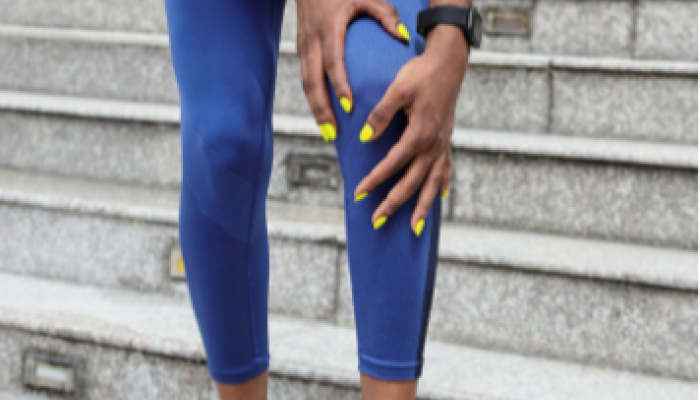
Pain around or behind the kneecap that flares on stairs, after sitting, or partway into a run is the most common knee complaint we see — and it usually is not coming from the kneecap itself. At Daniels Chiropractic in Racine, WI, we treat patellofemoral pain with chiropractic care, myofascial release, dry needling, Class IV laser therapy, and shockwave therapy, paired with the hip and thigh strengthening that keeps it from coming back. It is one of several conditions covered on our knee pain treatment page.
What Is Patellofemoral Pain Syndrome?
Your kneecap sits in a shallow groove at the end of your thigh bone and glides up and down that groove every time you bend and straighten the knee. Patellofemoral pain syndrome — often called runner's knee — is irritation of the tissue between the kneecap and that groove, usually because the kneecap is tracking slightly off-center or absorbing more force than it should.
It is common in runners, but you do not have to run to get it. We see it just as often in people who recently ramped up their walking, took a job with a lot of stairs, spend long days on hard floors, or started a new workout program a little too enthusiastically.
Common Signs of Runner's Knee
- A dull ache around, under, or just along the edges of the kneecap — often hard to point to with one finger
- Pain going down stairs or downhill, frequently worse than going up
- The "theater sign" — stiffness and soreness after sitting with the knee bent for a long stretch, which eases once you walk it off
- Pain with squatting, kneeling, or standing up from a low seat
- Grinding or a gritty sensation behind the kneecap
- Discomfort that starts partway into a run or walk rather than at the first step
When to Seek Immediate Medical Attention
Seek prompt medical care if your knee gives way, locks in place and will not straighten, or swells rapidly and significantly after an injury — those findings point to a structural problem such as a meniscus or ligament tear rather than patellofemoral pain. Also get evaluated right away if the knee becomes hot, red, and swollen with a fever, or if you develop pain, swelling, or warmth in your calf.
Why Runner's Knee Is Usually a Hip Problem
This is the part that catches most patients off guard. When the muscles on the outside of the hip are weak or slow to fire, the thigh bone rotates and drifts inward each time you land on that leg. The kneecap does not move off track so much as the groove moves out from under it — and the result is the same irritation. That is why treatment aimed only at the knee tends to give short-lived relief, and why we always examine the hip, the ankle, and how you load the leg.
Tight quadriceps, a stiff outer thigh, restricted ankle motion, and rapid jumps in training volume all stack onto the same problem. Sorting out which of those apply to you is what the exam is for.
How We Treat Patellofemoral Pain
Your care plan is built around your exam findings and what is driving your particular case. Most knee plans run twice a week for four weeks, and may combine any of the following:
- Chiropractic care: Gentle adjustments and mobilization restore normal motion to the knee, hip, and ankle. Limited ankle motion in particular forces the knee to compensate on every step and stair, so freeing it up often changes kneecap symptoms quickly.
- Myofascial release: Tight quadriceps and outer-thigh tissue pull the kneecap against the side of its groove. Using hands or specialized tools, we apply pressure to release that tension and the adhesions that form with chronic tightness, improving circulation and restoring flexibility.
- Dry needling: When the exam finds tender knots in the quadriceps, outer hip, or calf, myofascial trigger point dry needling places very thin monofilament needles directly into those trigger points to relieve the discomfort and let the muscle work through its full range again.
- Class IV laser therapy: Therapeutic light waves penetrate the skin and are absorbed by the cells below, which convert that light into chemical energy that accelerates healing — much the way plants use light for photosynthesis. Laser also reduces pain and swelling around an irritated kneecap so you can get back to loading the leg sooner.
- Shockwave therapy: A handheld device delivers acoustic shock waves into the irritated tissue around the kneecap and along the thigh. The waves break up scar tissue and stimulate blood flow, triggering your body's natural healing response. Treatment takes only a couple of minutes and may feel mildly uncomfortable during or shortly after.
- Therapeutic exercise: This is what makes the results stick. Strengthening the hip muscles that control the thigh bone, restoring quadriceps balance, and retraining how you squat, step, and land addresses the actual cause rather than the symptom.
What You Can Do at Home
Cut back rather than shut down. Reducing your mileage, avoiding downhill running and deep squats for a few weeks, and swapping in cycling with the seat set a little higher usually keeps you active without feeding the irritation. If your pain started within a few weeks of increasing your training, that jump is very likely the cause — build back up gradually once symptoms settle. Check your shoes too, since worn-out footwear quietly changes how you load the leg. And avoid sitting for hours with the knee bent under a desk without standing up to straighten it periodically.
Frequently Asked Questions
Is runner's knee the same as arthritis?
No. Patellofemoral pain is irritation from how the kneecap is loaded and tracked, and it is common in younger, active people with completely healthy cartilage. Knee osteoarthritis involves actual thinning of joint cartilage and tends to affect an older population. The two can overlap, which is one reason a proper exam matters.
Do I need an MRI for kneecap pain?
Usually not. Patellofemoral pain is diagnosed primarily through history and physical examination. Imaging becomes appropriate when the exam suggests something structural — locking, giving way, significant swelling, or symptoms that are not responding to appropriate care.
Can I keep running with runner's knee?
Often yes, at a reduced volume and on flatter terrain, as long as pain stays mild and settles quickly afterward. Running through sharp or worsening pain, or pain that lingers into the next day, tends to prolong the problem.
Does a knee brace or taping help?
They can help in the short term by changing how the kneecap loads and giving you more comfortable movement while you rehab. They work best as a bridge, not a substitute for correcting the hip and thigh mechanics underneath the problem.
Why does my knee hurt more going down stairs than up?
Descending requires your quadriceps to lengthen under load while the kneecap is pressed firmly into its groove, which produces substantially more force through the joint than climbing does. That is why stairs and hills are usually the first activities to hurt and among the last to feel normal again.
Get Your Knee Evaluated in Racine
If kneecap pain has you skipping runs, avoiding the stairs, or bracing yourself to stand up after a movie, it is worth finding out what is actually driving it. We serve patients throughout Racine, Mt. Pleasant, and Caledonia, and bilingual care is available — se habla español. Call (262) 638-9999 or schedule online today.