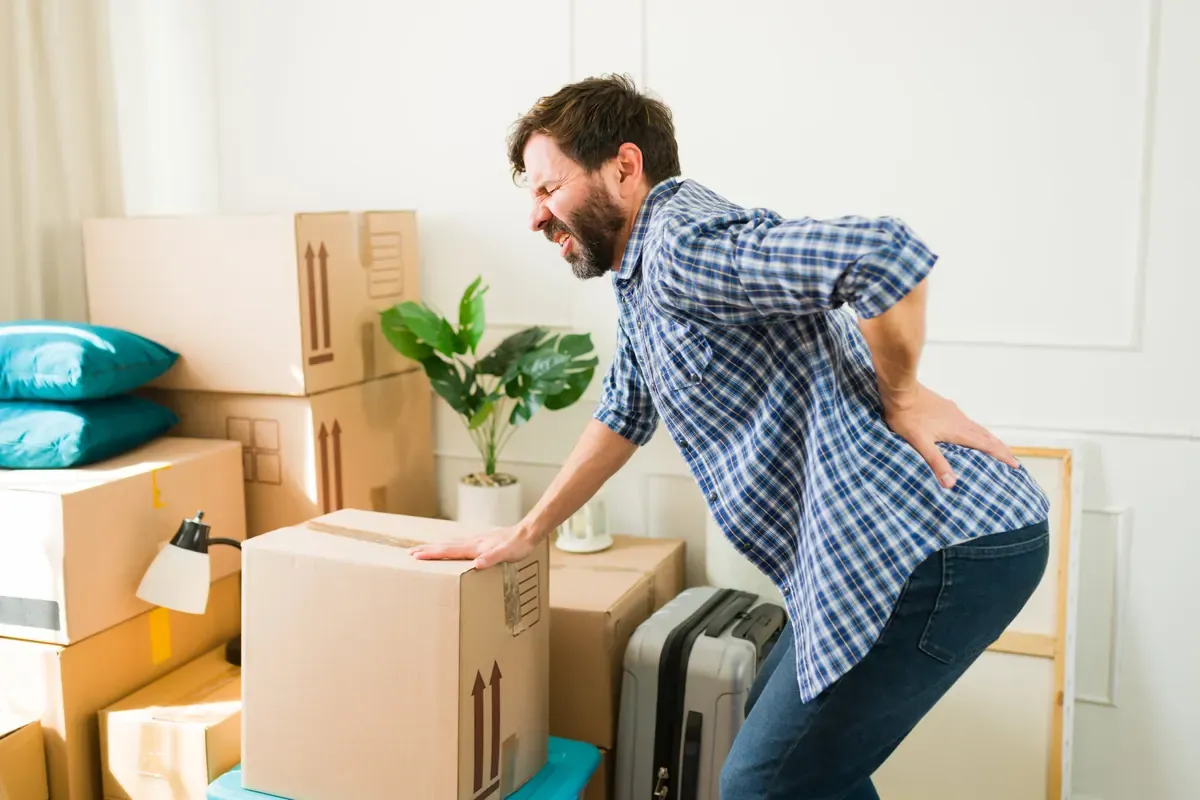
Most low back pain does not come from a slipped disc or a pinched nerve. It comes from the way the joints, muscles, and ligaments of the low back are moving and being loaded, which is what clinicians call mechanical or non-specific low back pain.1 At Daniels Chiropractic in Racine, WI, it is the most common thing we see. This article walks through what tends to cause it, what it usually feels like, and how we treat it. For the full picture, including disc and nerve-related back pain, see our low back pain.
What Mechanical Low Back Pain Means
“Mechanical” simply means the pain is tied to movement and load. A joint that is stiff and irritated, a muscle that is strained or guarding, or a ligament that has been overstretched can all produce real, sometimes intense pain. That is true even though nothing is damaged in a way that would show up clearly on an X-ray. That is also why there is often no single structure to point at. Guidelines describe most low back pain as non-specific for exactly this reason, and they focus care on reducing pain, staying active, and getting function back rather than chasing one finding on a scan.1
It also tends to behave well. In large pooled studies, people with a new episode of low back pain typically improved substantially within the first six weeks, although a smaller group kept having pain and benefited from closer follow-up.2
Common Signs
- Aching, tightness, or sharp catches across the low back, on one side or both
- Pain that changes with position, such as worse after sitting and easier when you walk, or the reverse
- Stiffness first thing in the morning or after sitting in the car
- Pain that may spread into the buttock or upper thigh but generally stays above the knee
- Muscle spasm or a feeling that your back has “locked up”
What Usually Causes It
In our office, mechanical low back pain usually traces back to one or more of a handful of things, and more than one is often involved at the same time:
- Muscle strain or spasm. Lifting, twisting, or a sudden movement overloads the muscles along the spine, and they tighten and guard to protect the area.
- Facet joint irritation. The small joints at the back of each vertebra can become stiff and sore, which often makes leaning back or twisting uncomfortable.
- Sacroiliac (SI) joint pain. The joint where the spine meets the pelvis can be a source of one-sided pain low in the back. We cover it in detail in our SI joint article.
- Posture and sitting load. Long stretches at a desk, on the couch, or in the car load the same tissues for hours without a break.
- Compensation patterns. Stiff hips, weak glutes, or an old ankle or knee injury can shift extra work onto the low back.
- Sudden spikes in activity. A weekend of yard work, moving furniture, or shoveling heavy snow asks the back to do far more than it is used to.
How It Differs From Disc Pain
A disc that is irritating a nerve usually behaves differently. It is more likely to send pain, numbness, or tingling down the leg, below the knee and sometimes into the foot, and it may come with weakness. If that sounds more like you, our pages on sciatica and herniated and bulging discs are the better place to start.
One thing worth knowing before anyone shows you an MRI: disc bulges and wear are very common in people with no back pain at all, and they become more common with age.3 A finding on a scan does not automatically explain your pain. That is why we start with a careful history and exam and order imaging when it will actually change the plan.
When to Seek Immediate Medical Attention
Serious causes of back pain are uncommon, but they matter. Go to the emergency room or call 911 if back pain comes with any of the following:
- New numbness in the groin, inner thighs, or “saddle” area
- New trouble controlling your bladder or bowels
- Leg weakness that is getting worse, or a foot that starts to drag or slap
- Back pain with fever, chills, or feeling generally unwell
- Back pain after a significant fall or accident, especially if you are older or have osteoporosis
- A history of cancer, or unexplained weight loss, along with new back pain
How We Treat It at Daniels Chiropractic
Our goal is to calm the pain down, get you moving normally again, and find out what is loading your back in the first place. Care usually combines several of these, chosen after the exam:
- Chiropractic adjustments to restore motion in stiff or irritated joints of the low back and pelvis, using gentler instrument-assisted or drop-table options when a back is acutely sore.
- Movement and home care, including the specific exercises and positions that calm your back down, so progress keeps going between visits.
- Dry needling for tight, tender trigger points in the muscles of the low back, hips, and glutes. Dr. Marissa Kaul and Dr. Stefany Cruz are certified in dry needling.
- Class IV laser therapy to help settle pain and inflammation in irritated tissue.
- Electrical muscle stimulation (EMS) to ease muscle spasm and guarding.
- Soft tissue work on tight, restricted muscles and tissue around the low back and hips.
- Shockwave therapy when the problem behaves more like a muscle strain or sprain than a joint problem. It is not our first choice for most low back pain.
Not every tool fits every back. What we recommend depends on what the exam finds, and we reassess as you progress.
The American College of Physicians guideline supports this kind of approach for acute and subacute low back pain, listing nondrug options such as superficial heat, massage, and spinal manipulation, and exercise-based care for pain that lingers.4 If you are not improving after about four weeks of care, we order imaging or refer out to the right specialist rather than simply doing more of the same.
What You Can Do at Home
- Keep moving within comfort. Short, easy walks usually help more than lying down all day.
- Use heat on tight, achy muscles. It is one of the better-supported things you can do on your own.
- Break up long sitting. Stand up, walk, and change positions regularly, especially at work and in the car.
- Lift close to your body and turn with your feet instead of twisting at the waist.
- Notice which positions ease your pain and which aggravate it. That pattern is useful information at your exam.
Frequently Asked Questions
What is mechanical low back pain?
Mechanical low back pain is pain that comes from the way the joints, muscles, and ligaments of the low back are moving and being loaded, rather than from a disease, an infection, or a pinched nerve. It usually changes with position and activity, feeling better in some positions and worse in others, and it is the most common kind of back pain we see.
How is mechanical back pain different from a disc problem?
Mechanical pain from muscles and joints tends to stay in the back, buttock, or upper thigh and changes with movement. A disc that is irritating a nerve more often sends pain, numbness, or tingling below the knee and into the foot. The exam helps tell them apart, and the two can overlap.
Do I need an X-ray or MRI for low back pain?
Usually not at the start. Imaging tends to show changes like disc bulges and wear that are common in people with no pain at all, so it rarely changes the plan early on. We order imaging when the exam or your history calls for it, or if you are not improving after about four weeks of care.
Can a chiropractor help mechanical low back pain?
For many people, yes. The American College of Physicians guideline lists spinal manipulation among the nondrug options for low back pain, alongside heat, massage, and exercise. We combine adjustments with movement and home care, and we refer out when something else is going on.
Is shockwave therapy used for low back pain?
Not for most low back pain. We use shockwave therapy selectively when the problem behaves more like a muscle strain or sprain. For most mechanical low back pain, adjustments, movement and home care, dry needling, Class IV laser therapy, EMS, and soft tissue work are the main tools.
Sources
- Maher C, Underwood M, Buchbinder R. Non-specific low back pain. Lancet. 2017. PMID: 27745712
- Wallwork SB, Braithwaite FA, O'Keeffe M, et al. The clinical course of acute, subacute and persistent low back pain: a systematic review and meta-analysis. CMAJ. 2024. PMID: 38253366
- Brinjikji W, Luetmer PH, Comstock B, et al. Systematic literature review of imaging features of spinal degeneration in asymptomatic populations. AJNR Am J Neuroradiol. 2015. PMID: 25430861
- Qaseem A, Wilt TJ, McLean RM, et al. Noninvasive Treatments for Acute, Subacute, and Chronic Low Back Pain: A Clinical Practice Guideline From the American College of Physicians. Ann Intern Med. 2017. PMID: 28192789
Get Your Back Checked in Racine
If your back has been nagging you, an exam can sort out where the pain is coming from and what will actually help. Daniels Chiropractic has taken care of Racine families since 1948, with more than 800 patient reviews and a 5.0 rating on Google. If you are in pain today, we try to get you in the same day. Most new patients who can be flexible are seen within a day or two. We see patients from Racine, Mt. Pleasant, and Caledonia, and Dr. Stefany Cruz provides bilingual care. Se habla español. Call or text (262) 638-9999 or schedule online.