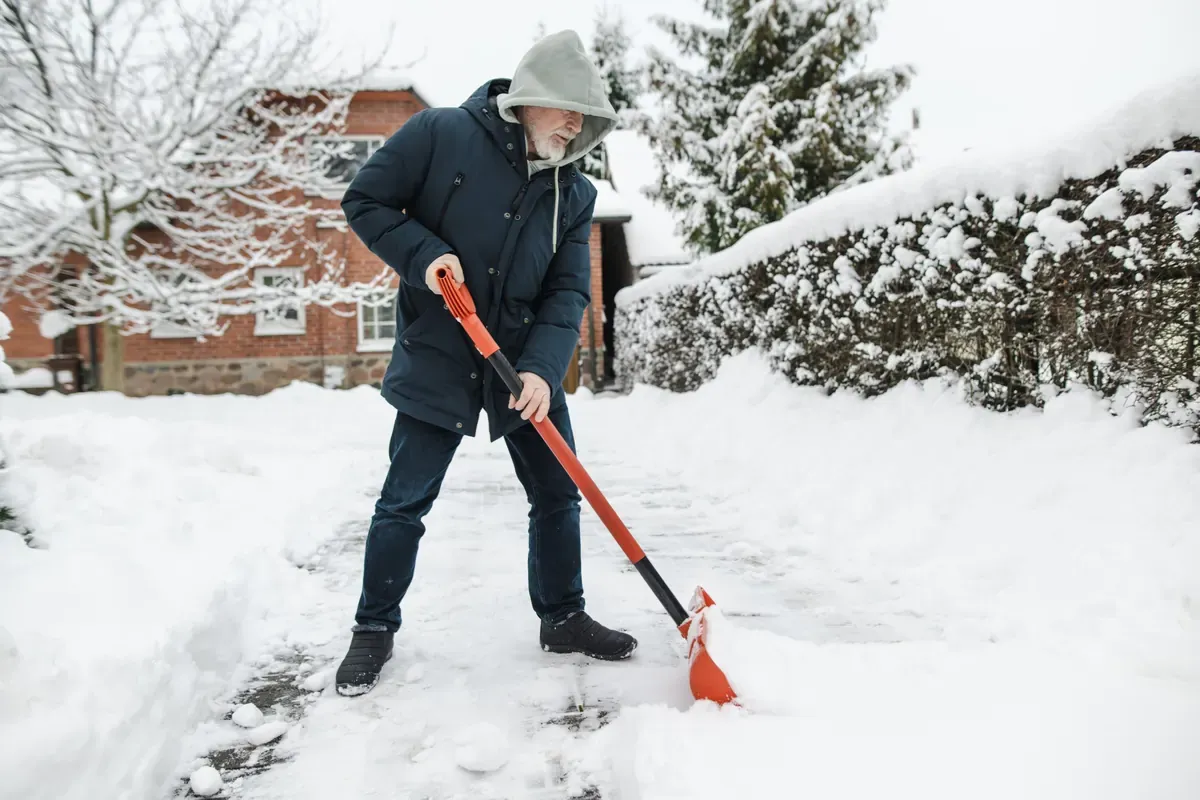
Every winter in Racine, the first heavy snowfall brings a wave of sore, locked-up backs into our office. Shoveling combines heavy lifting, twisting, cold muscles, and slippery footing, often done in a hurry before work. U.S. emergency departments treated an estimated 11,500 snow shovel-related injuries and medical emergencies a year in one national study, and the low back was the most commonly injured area.1 Here is how we tell patients to clear snow without hurting their backs. For the bigger picture on back pain, see our low back pain.
Why Shoveling Is So Hard on the Back
A full shovel of wet snow is heavy, and it is held out in front of the body, which multiplies the load on the low back. Add bending forward, then twisting to throw the snow over a shoulder, and you have the combination most likely to strain a muscle or irritate a joint. In that same national study, overexertion was the most common cause of shoveling injuries, followed by slips and falls.1 Cold, stiff muscles and a rush to finish before work make all of it more likely.
Common Signs of a Shoveling Back Injury
- A sharp catch or “pull” in the low back during a lift or twist
- Pain and stiffness that build over the evening or are worse the next morning
- Muscle spasm that makes it hard to stand up straight
- Pain on one side of the low back or into the buttock
When to Seek Immediate Medical Attention
Shoveling is real exercise, and for some people it is hard on the heart. Stop and call 911 if you have chest pain, pressure, or tightness; or pain spreading into the arm, jaw, neck, or back. Call too for unusual shortness of breath, lightheadedness, or a cold sweat while shoveling or afterward. Do not wait to see if it passes.
For your back, go to the emergency room or call 911 if pain comes with any of the following:
- New numbness in the groin, inner thighs, or “saddle” area
- New trouble controlling your bladder or bowels
- Leg weakness that is getting worse, or a foot that starts to drag or slap
- Back pain with fever, chills, or feeling generally unwell
- Back pain after a significant fall or accident, especially if you are older or have osteoporosis
- A history of cancer, or unexplained weight loss, along with new back pain
The Heart Side of Shoveling
In a small but well-known study of sedentary men, heavy snow shoveling pushed heart rate and blood pressure about as high as a maximal treadmill test.2 A larger study from Quebec found that heavier and longer-lasting snowfalls were followed by more hospital admissions and deaths from heart attack, mostly in men.3 Cardiac emergencies were a small share of shoveling-related ER visits, but they accounted for all of the deaths in the U.S. study.1
If you have heart disease, high blood pressure, diabetes, a history of smoking, or you are not usually active, talk with your physician before shoveling heavy snow. Using a snowblower or handing the job to someone else may be the safer choice.
Back-Safe Shoveling: What We Tell Patients
- Warm up first. Walk around the house or march in place for a few minutes, then do a few easy hip hinges and gentle trunk rotations. Cold muscles strain more easily.
- Use an ergonomic shovel. A bent or adjustable handle lets you stand more upright, and a smaller, lightweight blade keeps each scoop manageable.
- Push instead of lift. Whenever you can, push the snow to the edge of the driveway rather than lifting and throwing it. Pushing is far easier on your low back.
- Keep the loads small. When you do have to lift, take partial scoops, especially with wet, heavy snow. Several light scoops are easier on your back than one big one.
- Lift with your hips and knees, and turn your feet. Keep the shovel close to your body, bend at your hips and knees, and step or pivot to dump the snow instead of twisting at the waist or throwing it over your shoulder.
- Switch sides. Alternate which hand is low on the shovel and which side you dump to, so one side of your back does not do all the work.
- Pace yourself. Take breaks, stand up straight and walk around, and drink water. For big storms, clearing a few times during the snowfall is easier than tackling it all at the end.
- Watch your footing. Wear boots with good traction and salt or sand icy spots. Slips and falls were the second most common cause of shoveling injuries.
Snowblower Safety
A snowblower is usually easier on your back than a shovel, but it still takes some care:
- Start it squarely. Face the machine and use your legs when you pull the cord rather than yanking it with a twisted back. If yours has an electric start, use it.
- Let the machine do the work. Walk behind it and steer instead of forcing it through heavy snow or wrestling it around tight turns.
- Never clear a clog with your hands. Turn the machine off, wait for everything to stop, and use a clearing tool. Reaching into a snowblower is the main cause of serious snowblower hand injuries.4
- Remember it is still exercise. Pushing a heavy machine through deep snow raises your heart rate too, so the heart guidance above still applies.
How We Treat It at Daniels Chiropractic
If shoveling does catch up with you, care usually combines several of these, chosen after the exam:
- Chiropractic adjustments to restore motion in stiff or irritated joints of the low back and pelvis, using gentler instrument-assisted or drop-table options when a back is acutely sore.
- Movement and home care, including the specific exercises and positions that calm your back down, so progress keeps going between visits.
- Dry needling for tight, tender trigger points in the muscles of the low back, hips, and glutes. Dr. Marissa Kaul and Dr. Stefany Cruz are certified in dry needling.
- Class IV laser therapy to help settle pain and inflammation in irritated tissue.
- Electrical muscle stimulation (EMS) to ease muscle spasm and guarding.
- Soft tissue work on tight, restricted muscles and tissue around the low back and hips.
- Shockwave therapy when the injury behaves like a muscle strain or sprain.
Not every tool fits every back. What we recommend depends on what the exam finds, and we reassess as you progress.
If you are not improving after about four weeks of care, we order imaging or refer out to the right specialist.
What You Can Do at Home After Shoveling
- Stop for the day if your back starts to hurt. Finishing the driveway is not worth a week of pain.
- Stay gently active instead of lying down all day. Easy walks around the house usually help.
- Use heat on tight, sore muscles.
- Read our guide to what to do in the first few days after your back goes out.
Frequently Asked Questions
Is it better to push or lift snow?
Push whenever you can. Pushing snow to the side of the driveway with a pusher-style shovel puts far less strain on your low back than lifting and throwing it. When you do have to lift, keep the load small, bend at your hips and knees, keep the shovel close to your body, and turn your feet instead of twisting.
What kind of shovel is best for your back?
Look for a shovel with a bent or adjustable handle that lets you stand more upright, and a smaller, lightweight blade so you cannot overload each scoop. A wide pusher works well for clearing, and a smaller shovel is better for the heavy, wet snow at the end of the driveway.
Why do heart attacks happen while shoveling snow?
Heavy shoveling can push the heart about as hard as a maximal treadmill test, especially in people who are not used to that level of effort, and cold air adds strain. Studies have linked heavier and longer snowfalls to more heart attacks, mostly in men. If you have heart disease, high blood pressure, or a sedentary lifestyle, talk with your physician before shoveling heavy snow.
Is a snowblower safer for your back?
Usually it is easier on your back, but it is not risk-free. Avoid yanking the pull cord with a twisted back, let the machine do the work instead of muscling it around, and never clear a clogged chute with your hands. Turn it off and use a clearing tool, because reaching into a snowblower is the leading cause of serious snowblower hand injuries.
What should I do if I hurt my back shoveling?
Stop for the day, stay gently active rather than going to bed, and use heat on tight muscles. If the pain is severe, comes with leg numbness or weakness, or follows a fall, get checked. Call or text (262) 638-9999 and we will try to get you in the same day.
Sources
- Watson DS, Shields BJ, Smith GA. Snow shovel-related injuries and medical emergencies treated in US EDs, 1990 to 2006. Am J Emerg Med. 2011. PMID: 20825768
- Franklin BA, Hogan P, Bonzheim K, et al. Cardiac demands of heavy snow shoveling. JAMA. 1995. PMID: 7869560
- Auger N, Potter BJ, Smargiassi A, et al. Association between quantity and duration of snowfall and risk of myocardial infarction. CMAJ. 2017. PMID: 28202557
- Hammig B, Jones C. Hand injuries associated with reaching into a snow blower to clear clogged snow. Am J Emerg Med. 2020. PMID: 31307849
Hurt Your Back Shoveling?
If the driveway won this round, we can help you figure out what happened and get you moving again. Daniels Chiropractic has taken care of Racine families since 1948, with more than 800 patient reviews and a 5.0 rating on Google. If you are in pain today, we try to get you in the same day. Most new patients who can be flexible are seen within a day or two. We see patients from Racine, Mt. Pleasant, and Caledonia, and Dr. Stefany Cruz provides bilingual care. Se habla español. Call or text (262) 638-9999 or schedule online.